

take me home











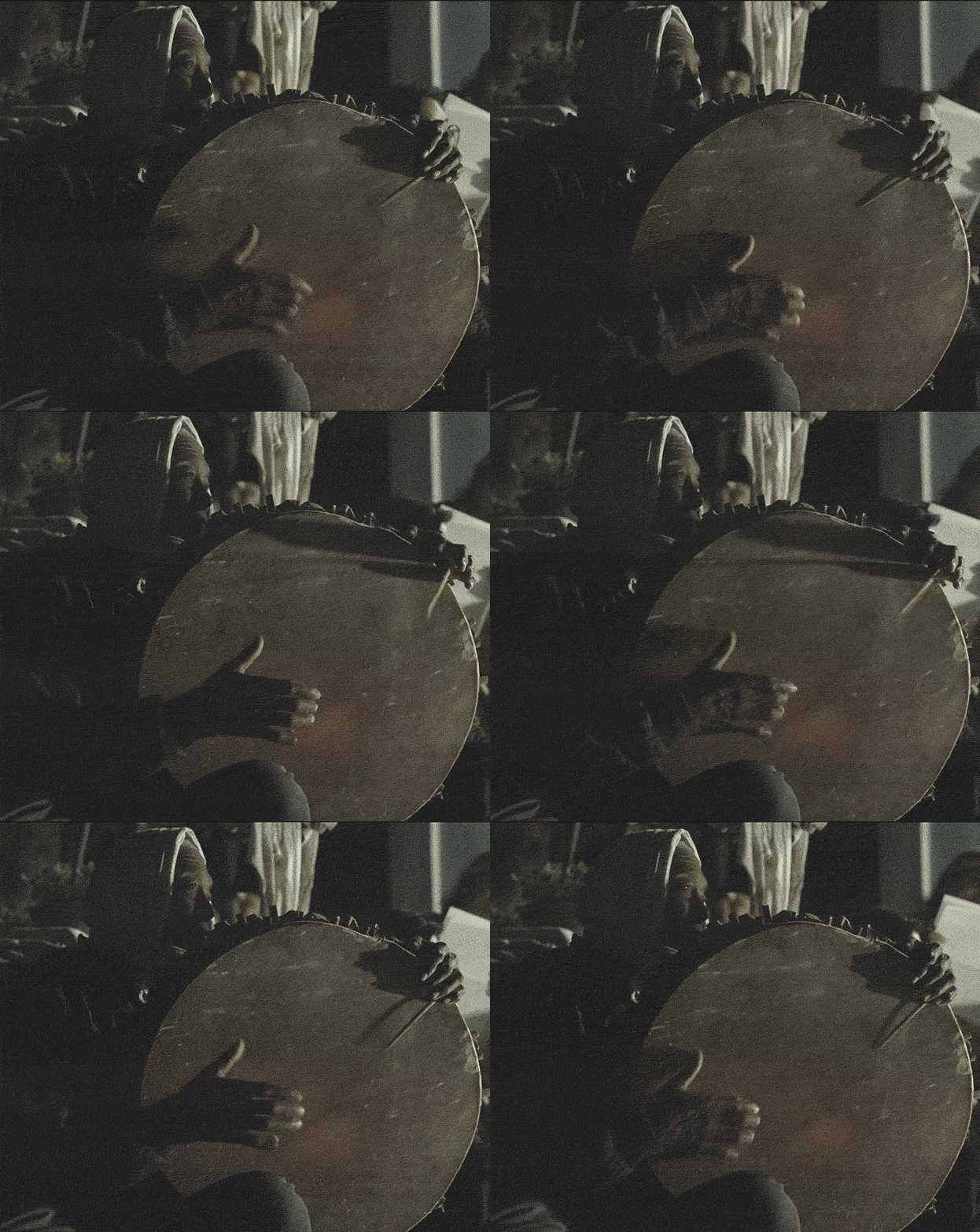
%20copy.webp)
There are those who make merry in halls of mirror
and some don’t even have a little shack
There are those who eat four-course meals on golden plates
and some can’t even fill an earthen pot
There are the rich, and the poor
Some are lords of vast lands—exploiters
They…who don’t see the poor as humans
They treat us like livestock
Born of poverty's womb
Servitude, my destiny
We would like to acknowledge the following people for their contributions to this project:
Workshops, introductions, studio tours, galleries:
“Nepal”
Yakthung Cho
Artree Nepal
Rukshana Kapali
Keepa Maskey
Indu Tharu
Aakrit Collective
Alchemy Imprints
Priyanka Singh Maharjan
Nyima Dorjee Bhotia
Yungdung Tsewang
“Australia”
Iluka Sax-Williams
Jenna Mayilema Lee
Peter Waples-Crowe
Yaraan Bundle
Maree Clarke
Caroline Martin
this mob
YIRRAMBOI
Koorie Heritage Trust
Tian Zhang
Tarik Ahlip
Binowee Bayles
Sha’an d’Anthes and Rocket
Leo Kelly Blacktown Arts Centre
Parramatta Artists Studio
PARI
Powerhouse Museums
Bayside LGA
Bankstown Arts Centre
Art Gallery of New South Wales
Web design and build:
Rio Ramintas
Charlotte McLachlan
Organisation & Funding partners:
High Altitude Exchange residency and program was produced by the City of Melbourne’s Arts House (Melbourne), 4A Centre for Contemporary Asian Art (Sydney) and Kalā Kulo (Lalitpur), with assistance from the Australian Government through the Cultural Diplomacy Grants Program and Creative Australia, its principal arts investment and advisory body.
PUBLISHED MAY 2026.

We begin this with fire. Fire and smoke form a central part of ceremonies in Indigenous/Adibasi cultures all around the world - for cleansing people and Country, healing, warmth, cooking and bringing people together. Fire can also be destructive, and with this destruction, offer new life & new potentials; an entry to an alternate future. It has the capacity to evoke raw emotions. Fire is something that connects us all.
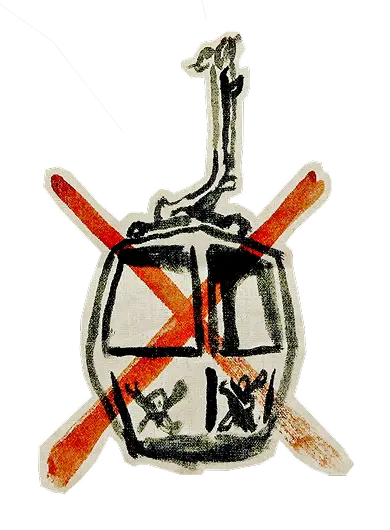
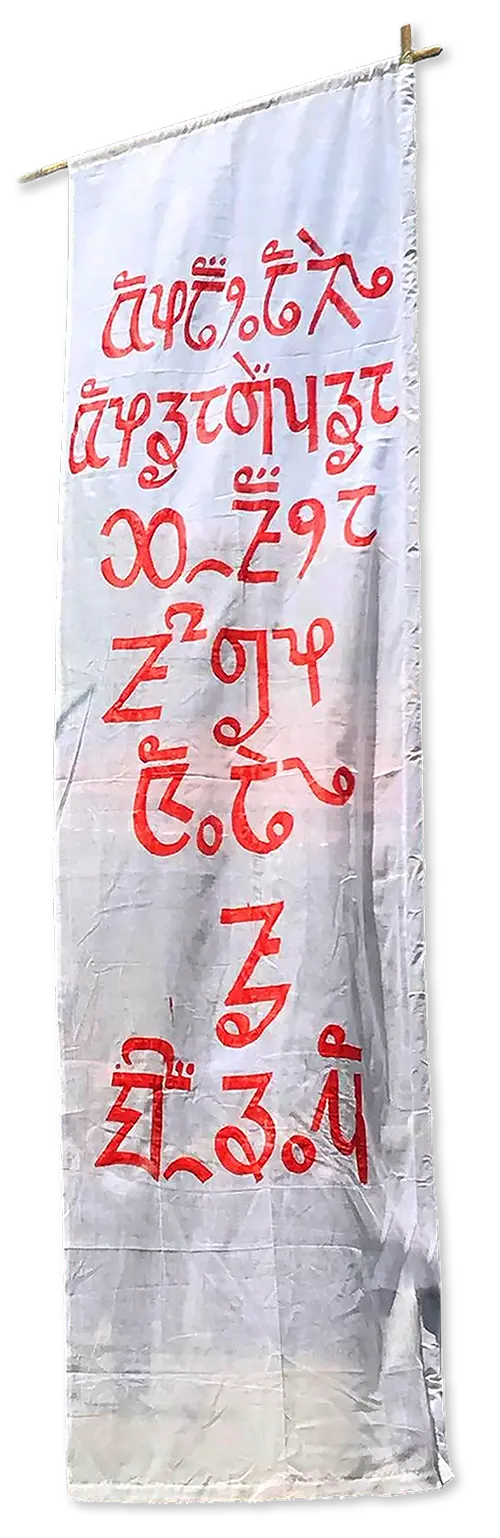
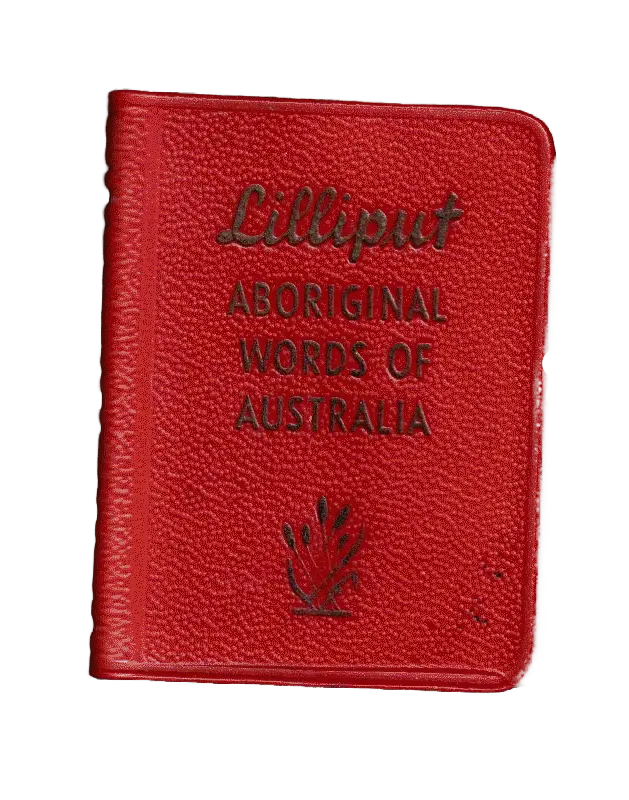
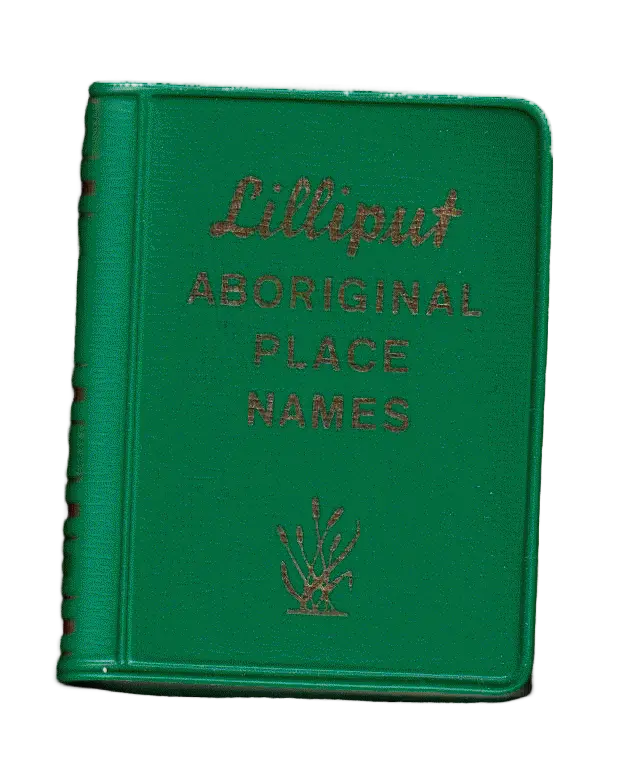
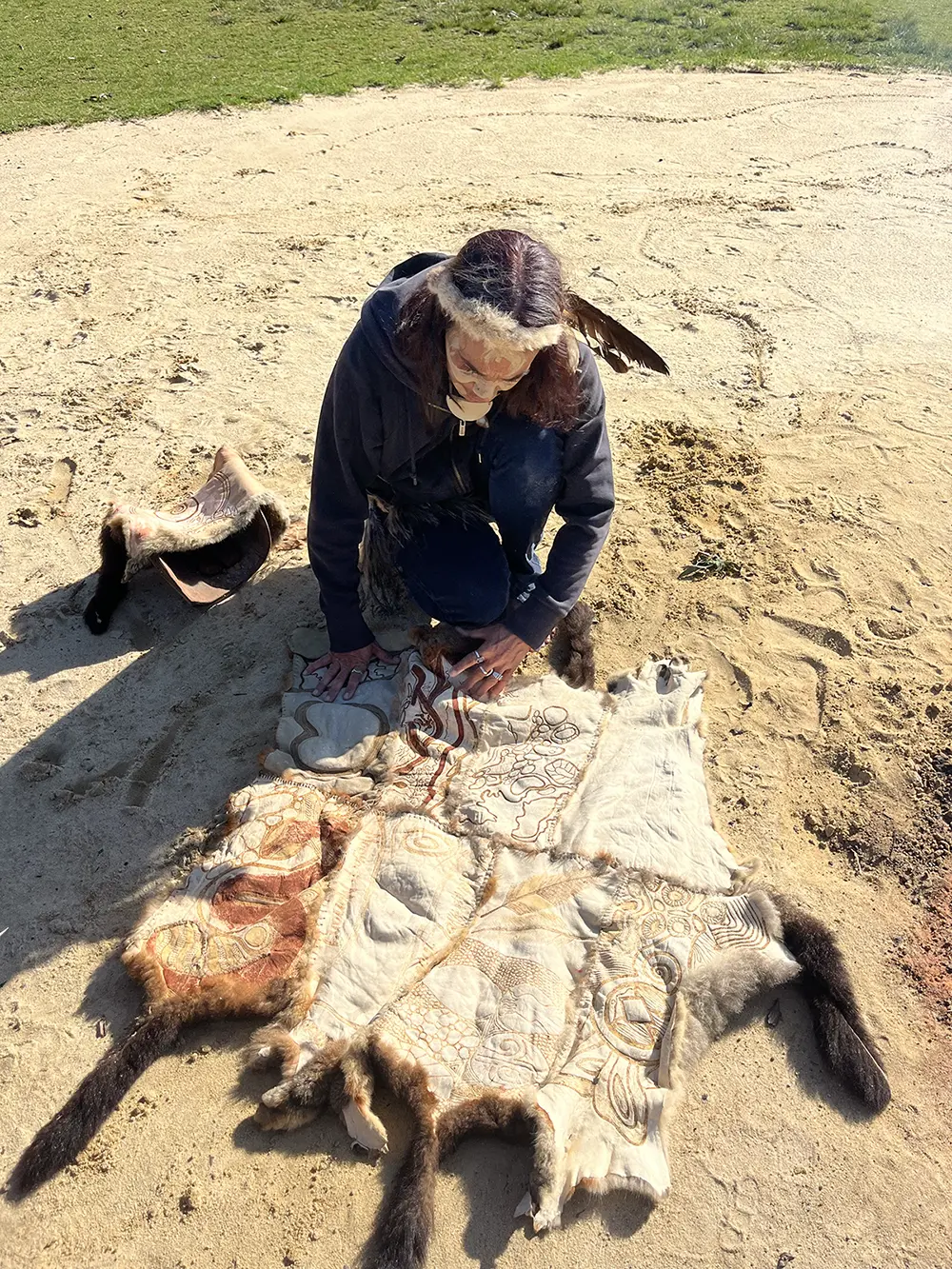
The six projects within this publication have been created by Indigenous/Adibasi artists from “Nepal” and “Australia”*. These new commissions carry with them a burning need to preserve and maintain culture through honouring language, archiving, the continuation of ancestral mark-making, and keeping the fire burning in movements that resist imperialism, colonialism & erasure.
This publication has been co-edited by Priyankar Bahadur Chand and Dipti Sherchan who are co-founders of Kalā Kulo, a collective art space based in Kathmandu, “Nepal” and Kate ten Buuren who is a founder of this mob, an Indigenous arts collective from Melbourne, “Australia”. The project was initiated by Arts House, 4A Centre for Contemporary Asian Art and Kalā Kulo, and supported cross-continental exchanges between Indigenous/Adibasi artists and curators with connections to high country regions of “Nepal” and “Australia”.
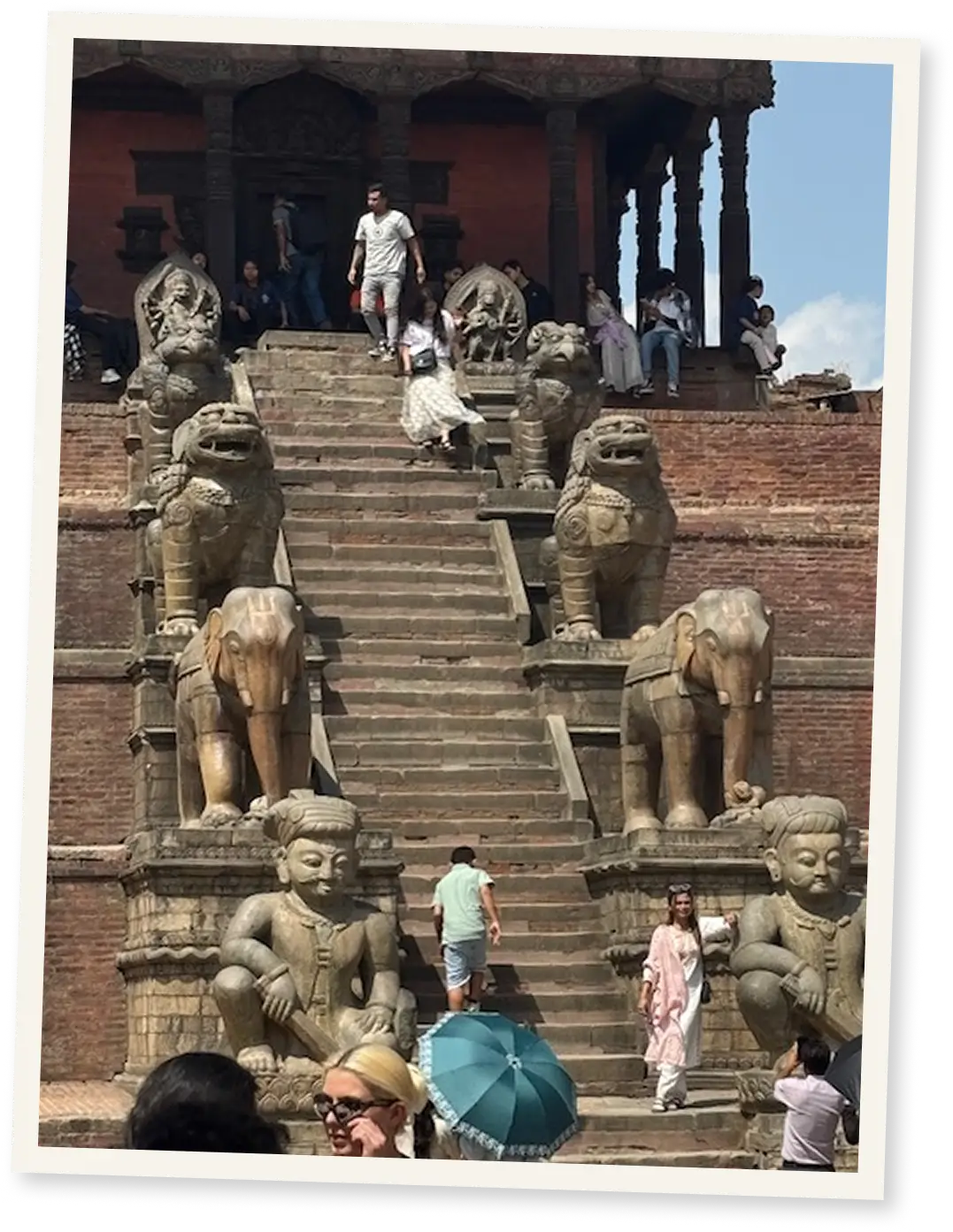
In April of 2025, Peter Waples-Crowe (Ngarigo) and Kate ten Buuren (Taungurung) visited “Nepal”. They landed in Kathmandu in the year 2082. Members of Kalā Kulo introduced Peter & Kate to art collectives, cultural practitioners and communities in Kathmandu & across the Mustang region. Later that year, Subash Thebe Limbu and Priyankar Bahadur Chand visited “Australia”.
As a part of the “Australian”-based trip, the group visited Camp Sovereignty - a space established by Indigenous activists twenty years ago. Camp Sovereignty reminds us that sovereignty was never ceded in “Australia” and is host to important conversations on land rights and ending ongoing genocides of First Peoples. A pillar of Camp Sovereignty is its fire, lit from the ashes of the fire burning at the Aboriginal Tent Embassy in Canberra, and central to the ceremonies that take place in both places. This sacred fire continues to burn, despite recent attempts by far-right extremists to extinguish it. Just as this fire continues to burn in the face of violent colonial attacks, the artists in this publication continue to make art that asserts their belonging and pride in culture, and the power of Indigenous knowledges to transform a hostile landscape where First Peoples are treated as aliens in their own lands.

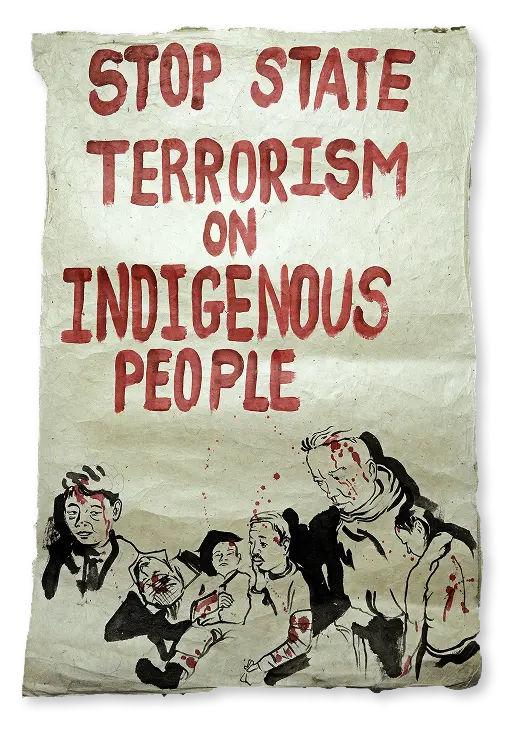
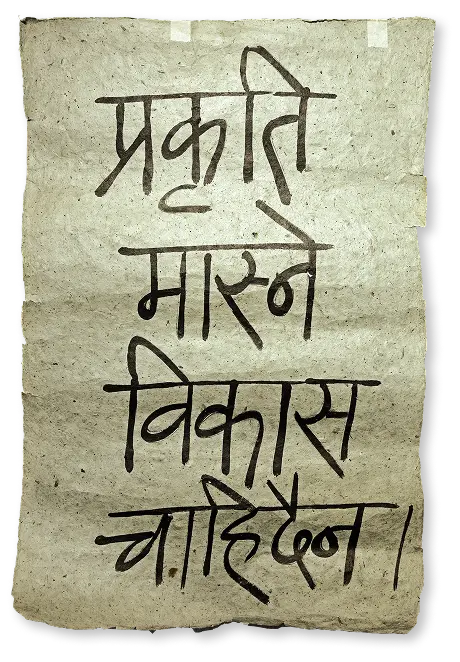
As this project came together the provocative dimensions of flames became even more palpable. In September 2025, the police killed protestors in Kathmandu. The consequent burning of the parliament, supreme court, and presidential office signalled a display of public reckoning unprecedented in the city’s history. Years of political discontent and structural apathy had reached a boiling point, the underlying condition that fed such a system informed many of the artists from “Nepal” who are a part of this exchange. Their texts, works, and practice foreground protests as active sites of cultural production for the continuation of Indigenous lifeways.
The High Altitude Exchange has ignited a flame between the Indigenous/Adibasi peoples in “Nepal” & “Australia” involved, which will continue to burn as we learn more about each other's contexts and histories, and as we move together into a future where global First Peoples are more connected than ever.
* We have chosen to put “Australia” and “Nepal” in quotation marks because these are terms that have been imposed, and undermine the complexities of Indigenous/Adibasi knowledges and ways of relating to place. “Nepal” itself is a term that is rooted in a history of internal colonisation and displacement of many communities from their land/s and practices, and as a nation-state, “Nepal” only emerged in the 18th century. In “Australia”, there are over 250 Aboriginal and Torres Strait Islander language groups across the continent who have been practising culture for over 80,000 years. The term “Australia” arrived with British settler colonialism, which landed on our shores just under 250 years ago, and since then has threatened the existence of our cultures, languages and peoples.